Call Now

Contact

https://onboatmarine.com

Marine Inverter Charger Options in Palm Beach County

Boating in Palm Beach County is more than a lifestyle—it’s a commitment to performance, comfort, and safety at sea. A marine inverter charger plays a central role in this, transforming DC battery power into AC electricity while also charging your battery bank. Whether you’re cruising along the Intracoastal or anchored offshore, having dependable onboard power is essential. These devices are key for keeping navigation, communication, and entertainment systems running smoothly—especially when you’re away from shore power.

Let’s explore how the right inverter charger can elevate your onboard experience and how OnBoat Marine provides expert installation tailored to your vessel.

Key Benefits of Using a Marine Inverter Charger

A marine inverter charger offers two essential functions in one unit: converting DC to AC and recharging your batteries. This makes it a space-saving and efficient solution for boats and yachts.

These systems ensure uninterrupted energy supply for critical devices such as GPS chartplotters, VHF radios, and onboard Wi-Fi, while also powering comforts like air conditioning, televisions, and boat lights. Advanced inverter/charger combos deliver faster and smarter charging with features like multi-stage regulation and source prioritization.

Built-in protections—such as automatic thermal cutoff, short-circuit prevention, and low-voltage shutdown—add an extra layer of safety for long-distance boaters in Palm Beach County.

Choosing the Right Inverter Charger for Your Boat or Yacht

Understanding Power Capacity Levels

Selecting the appropriate output power ensures optimal performance. Here’s a breakdown:

  • 800W–1200W: Ideal for weekenders powering minimal devices (lights, laptops, fans).
  • 1500W–3000W: Suitable for mid-sized boats running a mix of electronics and small appliances.
  • 4000W+: Necessary for luxury yachts using AC units, marine battery management systems, or full galleys.

To choose the right size, assess your vessel’s daily consumption and peak load demands.

Input and Output Voltage Options

Marine inverter chargers commonly support:

  • 12VDC or 24VDC inputs for standard marine batteries.
  • 48VDC for larger battery banks on electric or hybrid systems.

Most units output 120V AC, but some international vessels may require 230V or 240V AC. Always align voltage specs with your onboard marine electrical equipment.

Waveform Types: Pure Sine vs. Modified Sine

pure sine wave inverter closely mimics utility-grade electricity, ensuring compatibility with sensitive electronics like depth finders or induction cooktops. While modified sine wave inverters are more affordable, they often cause interference or malfunction in modern devices. For marine applications, especially with advanced tech, a pure sine wave model is strongly recommended.

Why Marine-Grade Matters: Durability and Safety

Unlike residential inverters, marine-grade units are engineered for harsh environments. Features like:

  • Corrosion-resistant casings
  • Waterproof housings
  • Built-in vibration dampeners

…make them essential for long-term performance in saltwater conditions. These systems also include certifications such as ABYC and NMEA standards, ensuring compliance and peace of mind at sea.

Must-Have Accessories for Optimal Installation

To enhance performance and convenience, consider these add-ons:

  • Remote control panels to monitor system status from the helm.
  • Battery temperature sensors for safe and efficient charging.
  • Bluetooth or Wi-Fi modules for mobile control via apps.
  • Automatic transfer switches to toggle between shore power or generator seamlessly.
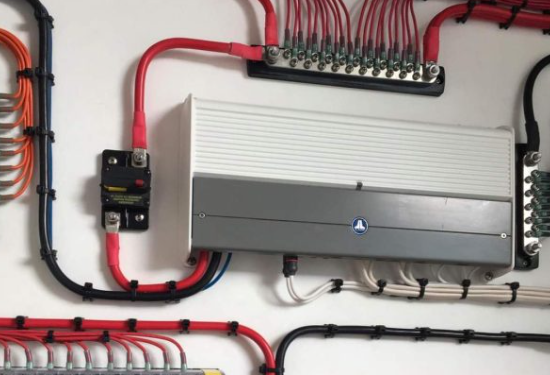
  • Proper marine-rated fuses, breakers, and cables for safe and tidy wiring.

These components help extend your system’s lifespan and improve energy efficiency.

Common Installation Mistakes to Avoid

Improper installation can lead to overheating, poor performance, or electrical failure. Avoid these pitfalls:

  • Using household-grade wires instead of marine-approved cabling.
  • Undersizing conductors, which increases resistance and voltage drop.
  • Overlooking compatibility with your marine battery charger 3 bank setup.
  • Installing units in damp compartments without ventilation.

Professional installation eliminates these risks and ensures your inverter charger operates at peak efficiency.

Trusted Marine Inverter Charger Installation in Palm Beach County

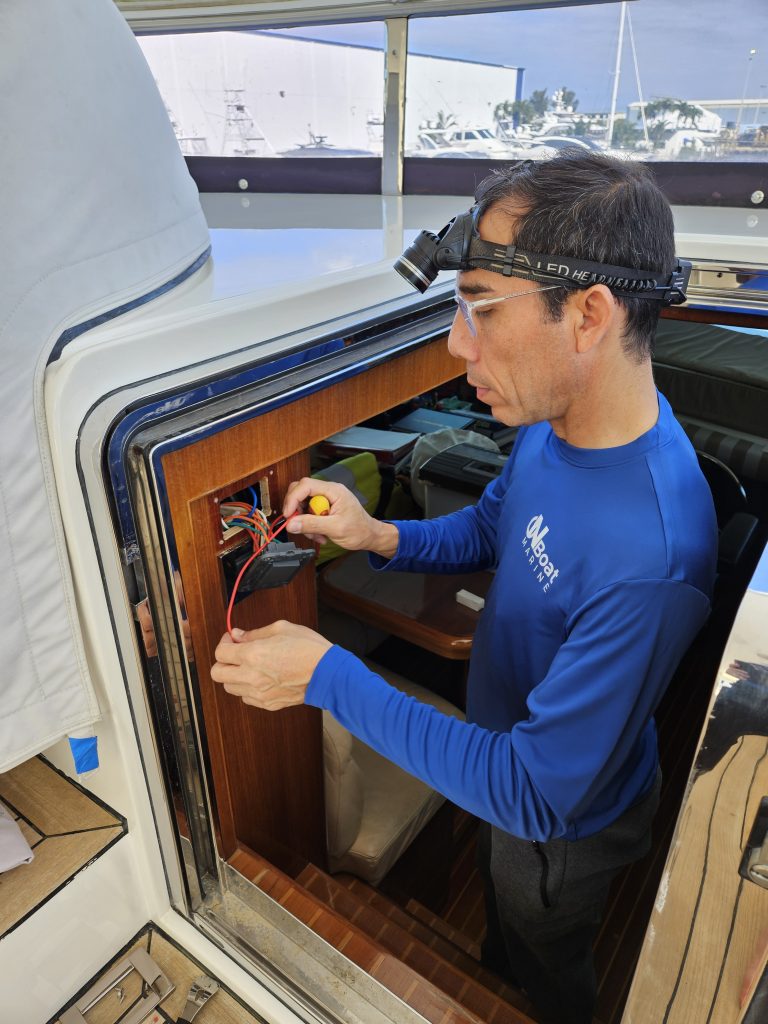
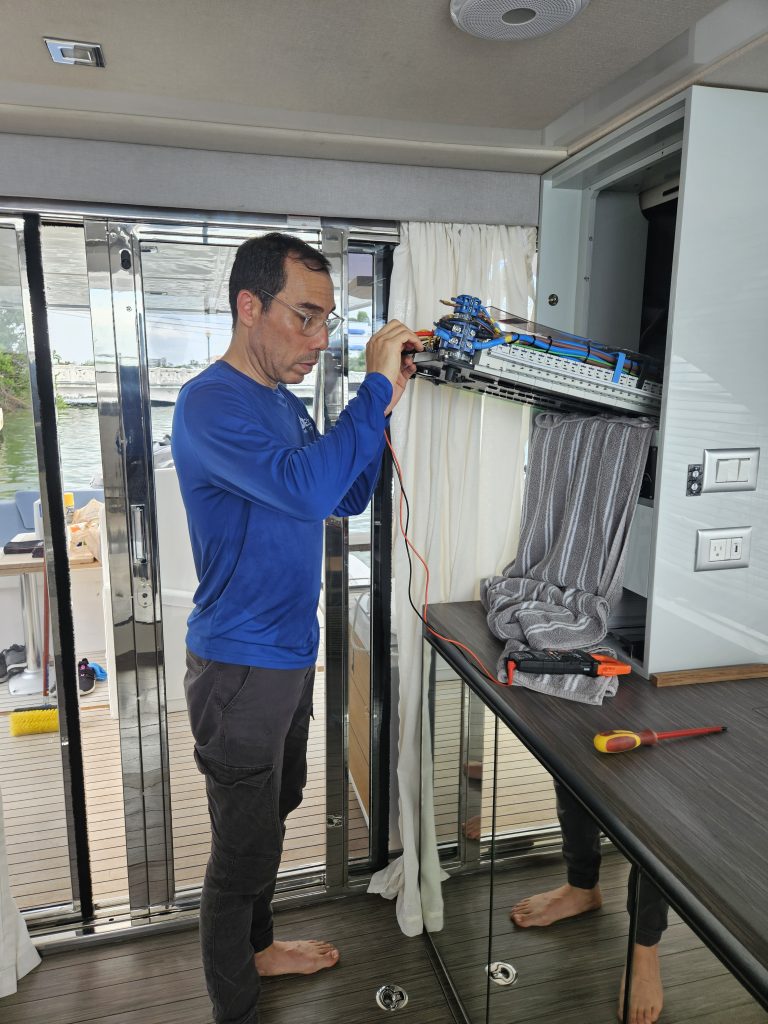
When it comes to installing electrical systems onboard, experience and specialization matter. OnBoat Marine is Palm Beach County’s go-to expert in marine electrical installations. Unlike general service providers, OnBoat Marine focuses solely on the installation of marine-grade electrical and electronic systems—not repairs or maintenance.

Our technicians are certified by ABYC and NMEA and understand the unique demands of Florida’s coastal environment. From choosing the right inverter to safely wiring a marine isolation transformer, our team ensures a seamless and code-compliant setup.

Power Your Boat With Confidence

A high-quality marine inverter charger is more than a convenience—it’s a necessity for safe, enjoyable, and reliable boating in Palm Beach County. Whether you sail casually or operate a high-performance yacht, a properly installed system ensures your marine solar panels, navigational tools, and entertainment devices all function at their best.

Ready to upgrade your power system? Trust OnBoat Marine for expert guidance and certified installation tailored to your vessel. Let us help you stay powered, wherever your journey takes you.