Surface-mount vs. thru-hull, colors, brightness, placement and wiring.
Read MoreLighting does more for a boat than any other upgrade of its size. Navigation lights keep you visible and legal, deck and courtesy lights make moving around at night safe, and well-planned interior lighting turns cabins and the salon into comfortable living spaces.

This guide covers the types of boat lighting, the advantages of LED, how to plan lighting zone by zone and the installation details that make it last.
Not all LEDs are equal: marine-rated fixtures are sealed against moisture and built to resist corrosion.
Navigation lights are required by the navigation rules: sidelights, a sternlight and a masthead or all-round light, depending on the size and type of vessel. They must be the correct type, color and visibility range for your boat.
LED navigation lights are brighter and far more reliable than bulbs, and many are certified for specific visibility ranges. When upgrading, choose certified marine navigation lights and check that the arcs of visibility are not blocked by the hardtop, T-top or equipment.
An all-round white anchor light must be shown at anchor at night, so it deserves the same reliability as the running lights. A remote-controlled searchlight or a pair of LED spotlights helps find markers, mooring balls and docks in the dark, and is one of the most appreciated upgrades on boats that return after sunset.
Courtesy lights along steps, gunwales and walkways, cockpit lights and spreader or flood lights make boarding, fishing and docking at night far safer. Red or dimmable lights at the helm protect night vision while you navigate.
On sport fishing boats, cockpit and tower lighting is part of the working setup; on yachts, perimeter and accent lighting also shape how the boat looks at the dock.
Planning the zones first, then the fixtures, gives a better result than replacing bulbs one by one.
Good lighting installations use marine-grade tinned wire, sealed connections, correct fusing for each circuit and dimmers compatible with the LEDs. Inexpensive LED drivers can also create radio interference that reduces VHF and AIS reception, so we choose fixtures carefully and test the radio with the lights on.
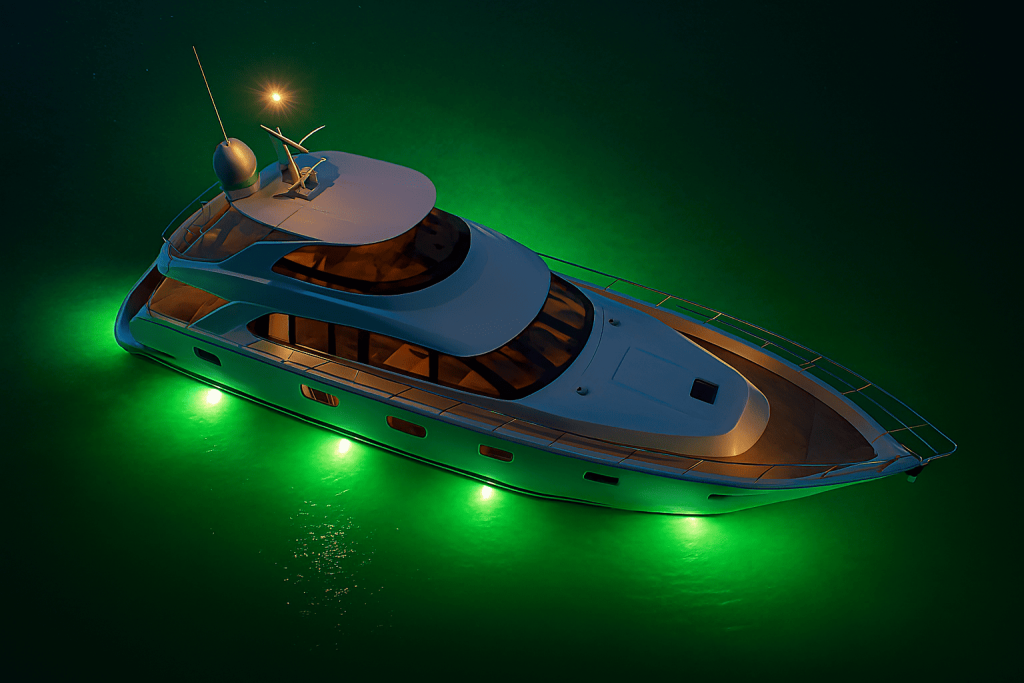
On yachts with digital switching or lighting control, lighting scenes can be set from the helm, a panel or an app. For lights below the waterline, see our underwater lights guide.
OnBoat Marine designs and installs navigation, deck, courtesy and interior lighting on site across Broward, Miami-Dade and Palm Beach counties.
See our specialized lighting systems service or contact us to plan the lighting for your boat.
In many fixtures, yes, with marine-rated LED replacements. For navigation lights, it is better to install certified LED navigation fixtures rather than LED bulbs in old housings.
Some LED drivers emit radio interference. Replacing the offending fixtures or drivers with quality marine units usually solves the problem.
Warm white works well in cabins and the salon; neutral or cool white is better for the galley, heads and engine room.
Yes, when they meet the navigation rules for your vessel, with the right colors, arcs and visibility range.
Yes, on boats with digital switching or a dedicated lighting controller, lights and scenes can be controlled from a panel, the chartplotter or a phone.
Need help? Request a quote or see our Specialized Lighting Systems services.
Surface-mount vs. thru-hull, colors, brightness, placement and wiring.
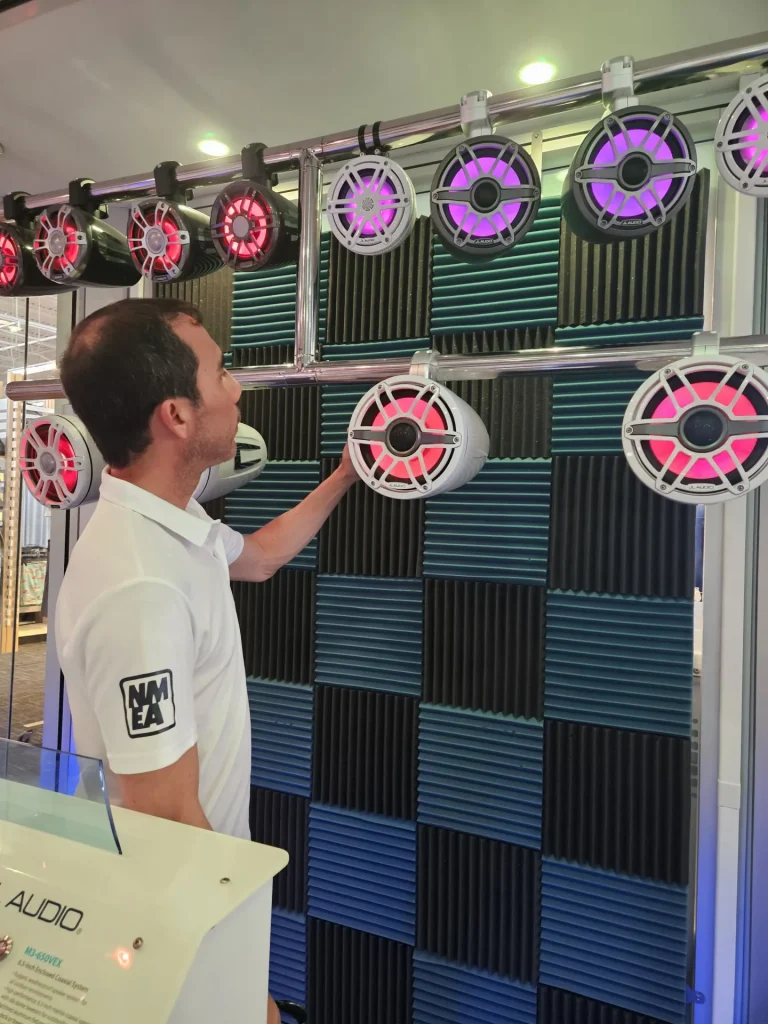
Read MoreHead units, speakers, amplifiers and audio zones built to survive...
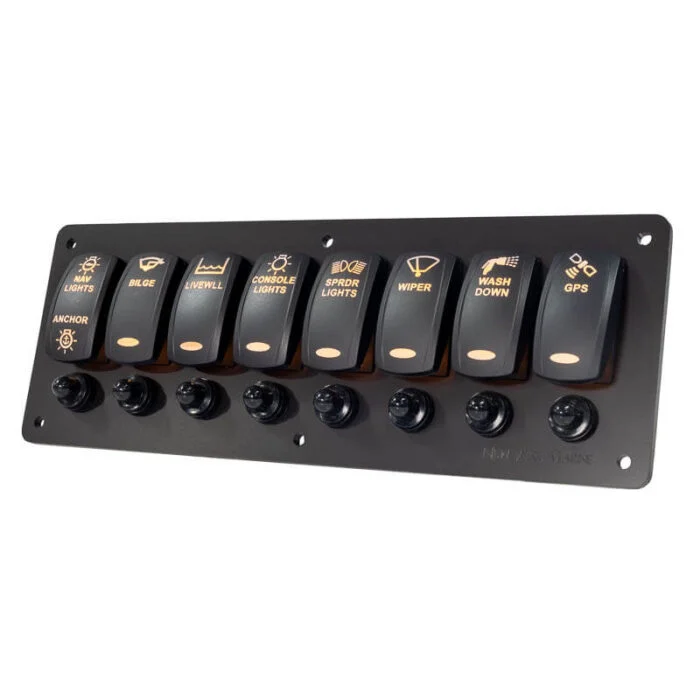
Read MoreAC/DC distribution, breakers, digital switching and when to upgrade your...
Read More