How calibration and clean integration improve navigation, situational awareness and...
Read MoreAn autopilot holds your course while you watch the water, manage the boat or simply rest on a long run. Connected to the chartplotter, it can follow a planned route, and as part of an integrated system it works together with radar, sonar and AIS on the same screens.
This guide explains the parts of an autopilot, how to choose the right system for your steering, and what integrated navigation looks like on a modern boat.
Every autopilot has the same core components:
The pilot compares the heading with the target course and makes small, continuous corrections, often more precisely than a person at the wheel.
On long runs to the Bahamas or the Keys, an autopilot reduces fatigue for the captain and frees hands for navigation, communication and managing the boat. Anglers use it to hold a drift line or troll a pattern while the crew works the cockpit. And because it corrects course constantly, it usually steers a straighter line than a person over hours at the wheel.
Whatever the mode, an autopilot does not replace a lookout. Someone must keep watch at all times.
The most important choice is the drive. It must match the steering type (hydraulic, mechanical cable or rack, or electronic steering on newer outboard and pod-drive boats) and be sized for the boat length, displacement and helm effort. An undersized drive struggles in following seas; an oversized one wastes power.
Many boats with modern electronic steering can connect an autopilot directly to the steering system without a separate drive. We check the steering system before recommending a pilot.
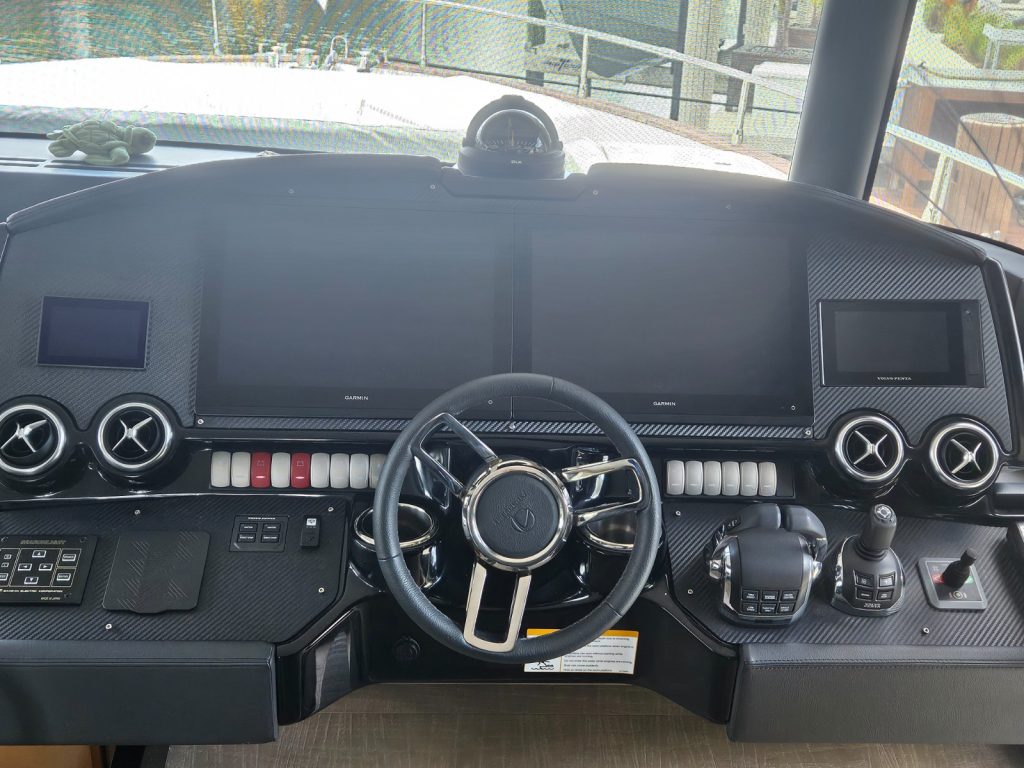
On a networked boat, the chartplotter becomes the control center. The autopilot follows routes drawn on the chart, radar targets and AIS vessels appear on the same screen, sonar is shared between stations, and engine data is always in view.
Garmin, Raymarine, Simrad and Furuno each offer complete ecosystems in which autopilot, radar, sonar and displays work together. Building the system within one ecosystem gives the deepest integration; NMEA 2000 lets key data flow between brands. See our GPS and chartplotter guide and marine radar guide.
Autopilot performance depends on the installation. The heading sensor must sit away from magnetic interference such as speakers, engines and heavy cables; hydraulic drives must be plumbed and bled correctly; and the drive and rudder reference must be mounted solidly.
After installation, the system is calibrated on a sea trial: compass deviation, rudder limits, steering response and gains. A well-calibrated pilot steers smoothly; a poorly calibrated one wanders or overcorrects.
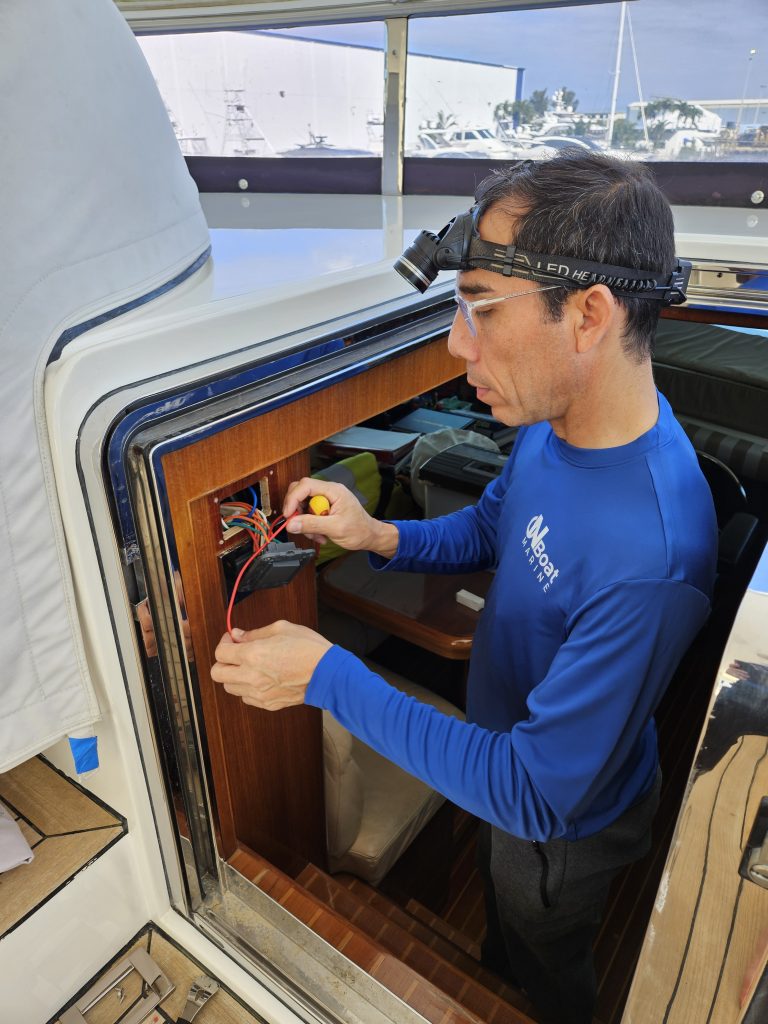
OnBoat Marine installs, upgrades and calibrates autopilots and integrated navigation systems on site across Broward, Miami-Dade and Palm Beach counties.
See our navigation systems service or contact us to plan your system.
Most boats with hydraulic, mechanical or electronic steering can take an autopilot. The drive must match the steering type and the size of the boat.
Usually yes, especially within the same brand. Basic route following also works across brands over NMEA 2000.
An autopilot steers, but it does not keep watch. Someone must always maintain a lookout while it is engaged.
Common causes are a poorly placed or uncalibrated heading sensor, air in hydraulic steering, or gains that do not suit the boat. Recalibration often solves it.
A well-tuned autopilot steers a straighter course with fewer corrections than most people, which can reduce distance and fuel use on longer runs.
Need help? Request a quote or see our Navigation Systems services.
How calibration and clean integration improve navigation, situational awareness and...
Read MoreDome or open array, magnetron or solid-state, Doppler and target...
Read MoreWhich features matter and how a chartplotter networks with radar,...
Read MoreCHIRP, down and side imaging, and choosing and installing the...
Read More