Fish Finders, Depth Finders & Transducers

A depth finder tells you how much water is under the boat; a fish finder shows what is in it. Both rely on sonar, and both depend on one component that is easy to overlook: the transducer. In South Florida, with shallow flats, inlets, reefs and wrecks, good sonar is as much a safety tool as a fishing one.

This guide explains how marine sonar works, the sonar technologies available today, how to choose a transducer and what a professional installation involves.

How Marine Sonar Works

The transducer sends sound pulses into the water and listens for the echoes from the bottom, structure and fish. The display turns the timing and strength of those echoes into depth readings and images.

Frequency sets the balance between depth and detail: lower frequencies reach deeper water with a wider beam, while higher frequencies show more detail in shallower water. A depth finder focuses on an accurate depth reading; a fish finder adds detailed images of bottom, structure and fish.

CHIRP, Down Imaging and Side Imaging

  • CHIRP sonar sweeps a range of frequencies instead of one, giving clearer target separation and better detail at depth.
  • Down imaging produces near-photographic images of what is directly below the boat.
  • Side imaging scans to both sides, ideal for finding wrecks, ledges and structure.
  • Live sonar shows fish and lures moving in real time, and is increasingly popular with serious anglers.

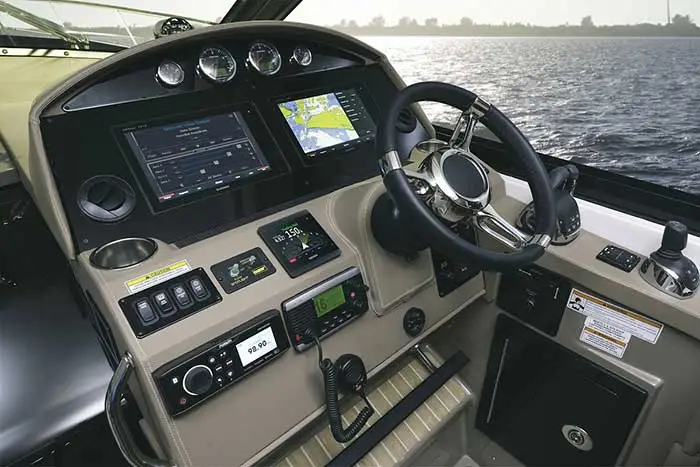
Many chartplotters include several of these technologies; see our GPS and chartplotter guide for the display side.

Sonar in South Florida Waters

Local conditions change what you need from sonar. Shallow flats and channels in Biscayne Bay and along the Intracoastal reward an accurate, fast depth reading. Offshore, the reefs, ledges and the many artificial reefs and wrecks off Broward and Palm Beach counties reward side imaging and CHIRP that can resolve structure in deeper water.

We recommend sonar based on where and how you actually fish or cruise, not just on the size of the screen.

Sharing sonar across the boat

On boats with more than one display, sonar can be shared over the manufacturer network, so the same transducer feeds the helm, the tower and a second station. Depth and water temperature can also be sent over NMEA 2000 to other instruments and to the autopilot, so one well-installed transducer serves the whole navigation system.

Choosing the Right Transducer

Transom mount

The most common option on outboard boats: easy to install and service, but sensitive to turbulence at speed.

Thru-hull

Mounted through the hull for the best performance at speed and in deeper water. It requires a haul-out and careful sealing and backing.

In-hull (shoot-through)

Bonded inside the hull with no holes below the waterline, at some cost in performance and depending on hull construction.

Trolling motor

Mounted on the trolling motor, often for live or forward-facing sonar.

Why Installation Decides Performance

The best fish finder is limited by its transducer installation. A professional installation:

  • Places the transducer in clean, non-turbulent water flow, away from strakes, intakes and other transducers.
  • Uses proper bedding, backing blocks and fairing for thru-hull units, so there are no leaks.
  • Routes cables away from power and VHF cables to avoid interference.
  • Sets the depth offset to the waterline or keel, and configures the sonar for your boat and conditions.

Sonar Installation Across South Florida

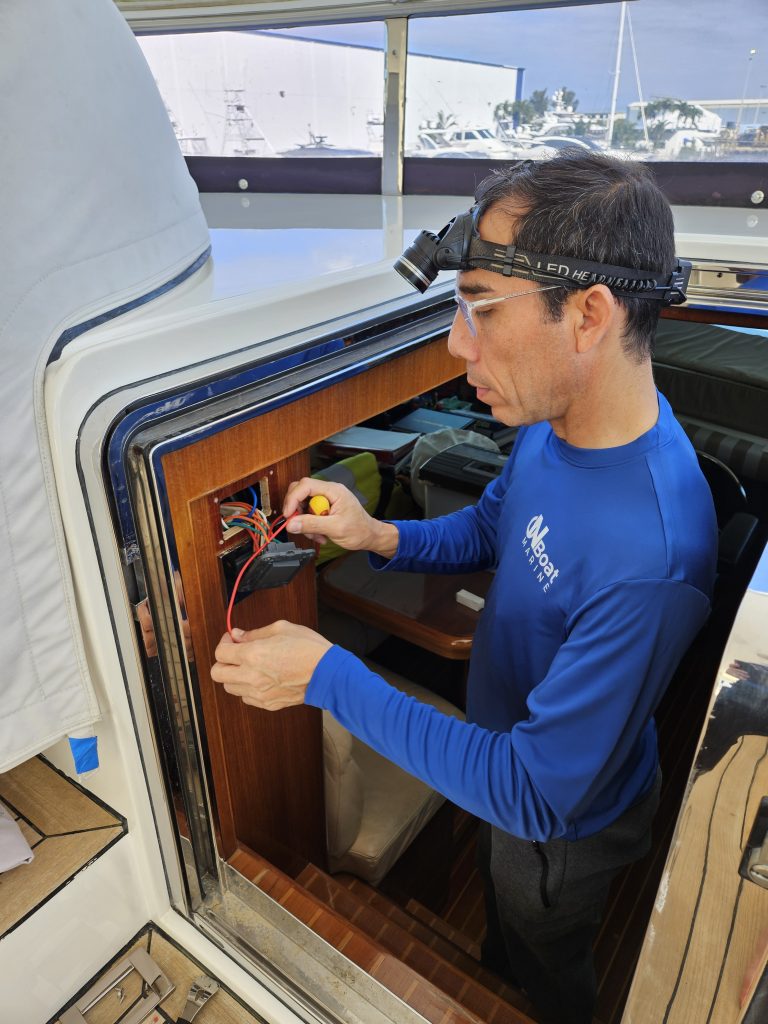
OnBoat Marine installs and upgrades fish finders, depth finders and transducers on site across Broward, Miami-Dade and Palm Beach counties, as standalone units or as part of a networked navigation system.

See our navigation systems service or contact us to plan your sonar upgrade.

Frequently Asked Questions

What is the difference between a depth finder and a fish finder?

A depth finder focuses on showing the depth under the boat. A fish finder uses the same sonar principle to show detailed images of the bottom, structure and fish.

CHIRP gives clearer images and better target separation than single-frequency sonar. For most anglers it is a worthwhile upgrade.

It depends on the hull, the engines and how fast you run. Thru-hull units perform best at speed; transom mounts are simpler; in-hull units avoid holes below the waterline.

Usually because of turbulence or air bubbles over the transducer. Moving or adjusting the transducer often solves the problem.

Often yes, if the transducer is compatible with the display and its connector. We check compatibility before recommending one.

Call Now

Contact