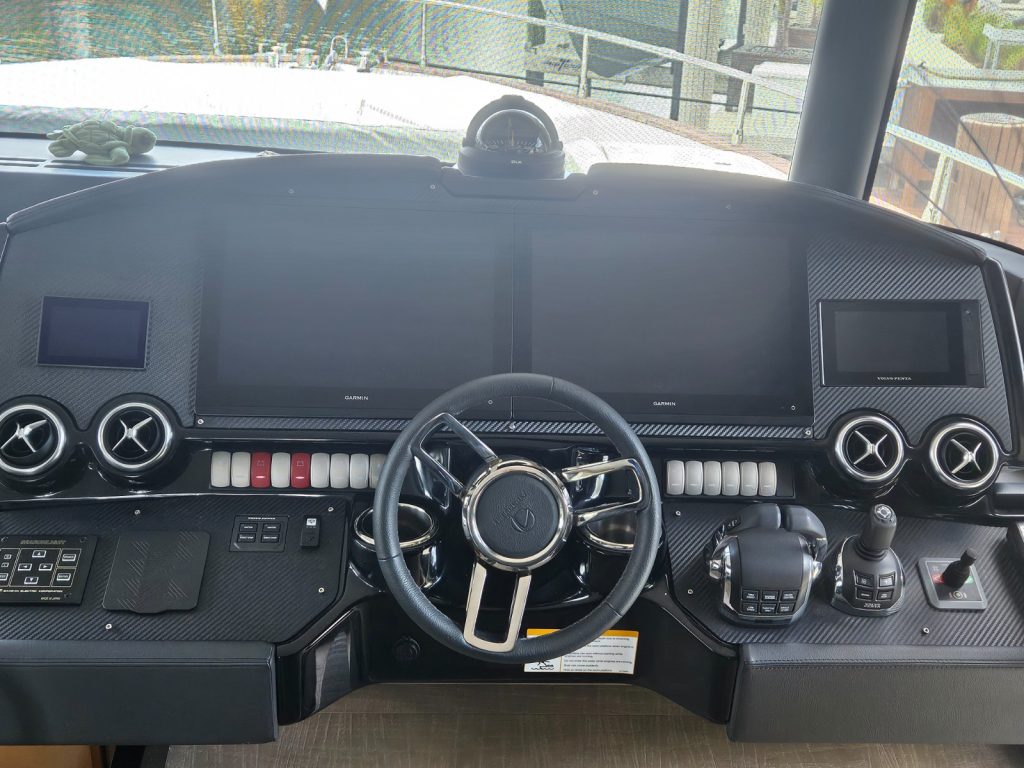
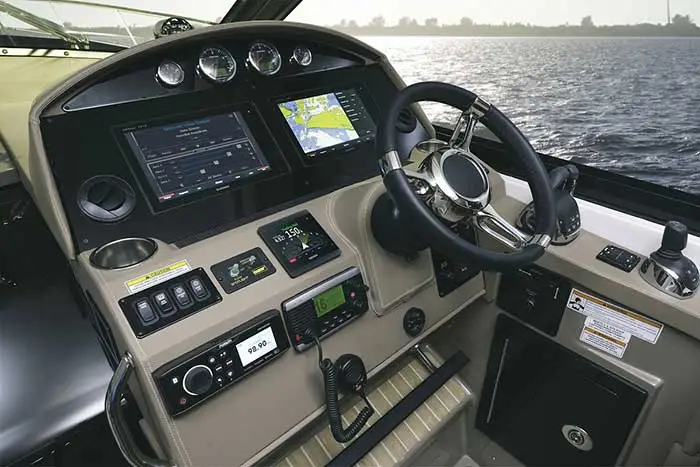
Which features matter and how a chartplotter networks with radar,...
Read MoreRadar lets you see what your eyes cannot: other vessels, the shoreline, markers and approaching storms, at night, in rain and in fog. Overlaid on your chartplotter, it turns a busy inlet or a squall line into something you can plan around instead of react to.

This guide explains the types of marine radar available today, the features that matter and why the installation has such a large effect on performance.
A marine radar sends out microwave pulses from a rotating antenna and measures the echoes that return. The result is a live picture of vessels, land, buoys, bridges and rain cells around your boat.
Connected to a chartplotter, the radar image can be overlaid on the chart, and targets can be tracked so the system shows their course, speed and closest point of approach. That makes radar one of the most valuable safety tools on board, not just for offshore runs but for night returns and summer storms close to home.
AIS shows the name, course and speed of vessels that transmit it, but many recreational boats do not, and AIS never shows land, markers or weather. Radar sees everything that reflects a signal. Used together on the same chartplotter, they give the most complete picture of what is around you.
The antenna rotates inside an enclosed housing. Domes are compact, light and draw less power, which makes them the standard choice for center consoles, sport fishing boats and smaller cruisers.
A longer antenna rotates in the open. The longer the array, the narrower the beam, which gives sharper target separation and better long-range performance. Open arrays suit larger yachts and boats that run offshore often, provided there is space and power for them.
Magnetron radars are the traditional technology: high peak power and good long-range detection, but they need warm-up time and the magnetron wears over the years.
Solid-state radars, such as Garmin Fantom, Simrad Halo, Raymarine Quantum and Furuno DRS NXT models, transmit at much lower power, are ready almost instantly, see very well at short range and usually offer Doppler processing, which colors targets that are approaching or moving away. For most new installations, solid-state is the first option we consider.
The best radar performs poorly if it is mounted in the wrong place. Mounting height affects range: higher sees farther, but too high can create a blind zone close to the boat. The antenna must clear masts, outriggers and other antennas, and the beam should pass above head height where people stand.
A professional installation also covers a proper power supply and fusing, clean network and power cable runs, heading sensor installation and calibration: bearing alignment, and tuning of gain, sea clutter and rain clutter. We install and integrate Garmin, Raymarine, Simrad and Furuno radars.
From the Intracoastal Waterway and Port Everglades to the inlets of Palm Beach and Biscayne Bay, South Florida waters combine heavy traffic, night runs and fast-building summer storms. OnBoat Marine installs and upgrades radar on site across Broward, Miami-Dade and Palm Beach counties.
See our navigation systems service, read our GPS and chartplotter guide, or contact us for a radar evaluation.
If you run at night, offshore or in reduced visibility, radar is one of the most useful safety upgrades available. Compact dome radars are designed precisely for smaller boats.
Rated range varies by model, but practical range is limited by line of sight: the height of your antenna and the height of the target. Large targets and coastlines are detected much farther away than small boats.
Solid-state radars transmit at very low power. For any radar, the antenna should be mounted so the beam passes above head height in areas where people stand.
Usually yes, if the radar is compatible with your chartplotter brand and network. We check compatibility before recommending a model.
MARPA (Mini Automatic Radar Plotting Aid) tracks selected radar targets and calculates their course, speed and closest point of approach to help you avoid collisions. It requires a heading sensor.
Need help? Request a quote or see our Navigation Systems services.
Which features matter and how a chartplotter networks with radar,...
Read MoreCHIRP, down and side imaging, and choosing and installing the...
Read MoreVHF radios with DSC and AIS, Class B transponders, antennas...
Read MoreDrives and sensors, integration with radar and sonar, and why...
Read More