Marine Battery Chargers: 3-Bank, Onboard & Portable

A battery bank is only as good as the charger that refills it. The right marine battery charger keeps every bank full, extends battery life and makes sure your boat is ready the moment you leave the dock. The wrong one, or a poorly installed one, quietly shortens the life of expensive batteries.

This guide covers how marine chargers work, when an onboard or portable charger makes sense, why multi-bank chargers are the standard on most boats, and what to check before you buy.

What a Marine Battery Charger Does

Modern marine chargers are multi-stage, smart chargers. They charge in phases: a bulk stage that delivers maximum current, an absorption stage that tops the battery off at a controlled voltage, and a float or maintenance stage that keeps it full without overcharging.

Marine chargers are also built for the environment: sealed against water and corrosion, resistant to vibration, and designed for installation in engine rooms and lockers. An automotive charger left on board does not offer the same protection or charging accuracy.

Onboard vs. Portable Chargers

Onboard chargers

Permanently mounted and wired to shore power. Every time the boat is plugged in, the batteries are charged and maintained automatically. This is the right choice for almost every boat kept at a marina or on a lift with power.

Portable chargers

Useful for small boats without shore power, trailered boats and seasonal storage. Portable lithium jump starters are a different tool: they are excellent for emergencies, but they do not replace a proper charger.

Other charging sources

Away from the dock, batteries are recharged by the engine alternator, a generator or solar panels. On boats with lithium house banks or long cable runs, a DC-DC charger between the alternator and the house bank delivers the correct charging profile and protects the alternator.

Why a 3-Bank Charger?

Most boats have more than one battery bank: engine start, house and, on many fishing boats, a trolling motor bank. A multi-bank charger has an independent, isolated output for each bank, so every battery receives the charge it needs at the same time.

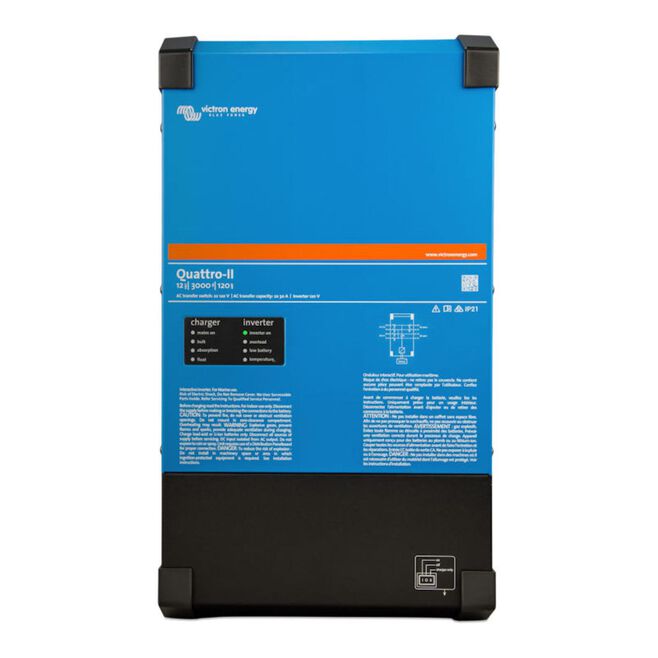
A 3-bank charger is the most common setup on center consoles and bay boats with two engines or a 24-volt trolling motor. On larger yachts, higher-output chargers or charger-inverters handle bigger house banks, often together with a battery management system.

How to Choose: Amperage, Voltage and Chemistry

  • Amperage: as a general guide, total output of about 10% to 25% of the bank capacity in amp-hours works well for lead-acid and AGM. Lithium can accept more current, which shortens charging time.
  • Voltage: confirm whether your banks are 12, 24 or 36 volts, especially for trolling motors.
  • Battery chemistry: the charger must have the correct profile for flooded, AGM, gel or lithium, ideally selectable per bank.
  • Temperature compensation: adjusts charging voltage in the South Florida heat.
  • Monitoring: a remote display or app lets you see charging status from the helm.

Popular Multi-Bank Chargers

Among the multi-bank chargers we install most often are the NOCO Genius GENPRO10X3, Minn Kota Precision MK 330PC, ProMariner ProSport HD 20 Plus, Dual Pro Professional Series PS3 and Guest ChargePro 10/3. All of them are proven marine designs; the right one depends on the number of banks, the amperage your batteries need and the battery chemistry on board.

Before choosing a model, we review the batteries, the alternator and any solar charging, so the charger fits the whole system rather than just the battery tray.

Professional Installation in South Florida

A charger connects to both AC shore power and DC battery circuits, so installation matters. We install a dedicated AC breaker, size the DC cables for each output, fuse every positive lead near the battery, and mount the charger in a dry, ventilated location where it can shed heat.

OnBoat Marine installs onboard and multi-bank chargers on site across Broward, Miami-Dade and Palm Beach counties. See our battery banks and charging systems service or contact us for a recommendation for your boat.

Frequently Asked Questions

What size battery charger do I need?

A total output of roughly 10% to 25% of your bank capacity in amp-hours is a good starting point for lead-acid and AGM batteries. Lithium banks can usually accept more current. The number of banks and their voltage also matter.

Yes, with a quality multi-stage charger. Once the batteries are full it switches to float or maintenance mode, which keeps them ready without overcharging.

They need a charger with a lithium (LiFePO4) profile and correct voltage settings. Many modern marine chargers include it, but older chargers often do not.

Many models allow a different profile on each bank, but not all. Check the specifications before mixing AGM and lithium banks on the same charger.

No. A jump starter gives a short burst to start an engine in an emergency. A charger restores the full charge of a battery over several hours.

Call Now

Contact