30 A vs. 50 A service, shore power vs. generator,...
Read MoreA marine inverter turns the DC power stored in your batteries into the AC power used by household appliances: coffee makers, microwaves, televisions, chargers for laptops and phones. With the right inverter, you can enjoy those comforts at anchor without running the generator.

This guide explains the types of inverters used on boats, how to size one for your loads and your battery bank, what an inverter charger adds, and why installation is where most of the safety lies.
The inverter draws current from the battery bank and converts it from low-voltage DC (12, 24 or 48 volts) into 120-volt AC. It powers the outlets and appliances connected to it until the batteries reach their low-voltage limit.
That conversion has a cost: AC power at the outlet comes from a much larger DC current at the battery. A 1,000-watt load on a 12-volt system draws roughly 90 to 100 amps from the bank once efficiency losses are included. That is why the inverter, the battery bank and the cabling must be planned together, and why larger systems often move to 24 or 48 volts.
Pure sine wave inverters produce clean AC power equivalent to, or better than, the power from the marina. They run every appliance correctly, including electronics, variable-speed motors, induction cooktops and battery chargers.
Modified sine wave inverters are cheaper but produce a stepped waveform. Some devices run hotter, buzz or fail to work at all. On a modern boat with sensitive electronics, we recommend pure sine wave in almost every case.
Add up the loads you want to run at the same time, in watts, and look at two figures on the specification sheet:
Then check the battery side. Running a microwave or an espresso machine from an inverter is easy for a few minutes; running air conditioning all night is a different project that needs a large lithium bank and a strong charging system. Our marine batteries guide explains how to size the bank.
An inverter charger combines three devices in one: an inverter, a multi-stage battery charger and an automatic transfer switch. When shore power or the generator is available, it passes AC through to the boat and charges the batteries. When the AC source disappears, it switches to inverter mode within milliseconds.
Many models also offer power assist, which supplements a limited shore-power connection with battery power during peaks, and integrate with battery monitors and displays. Victron and Mastervolt are among the systems we install most often on yachts.
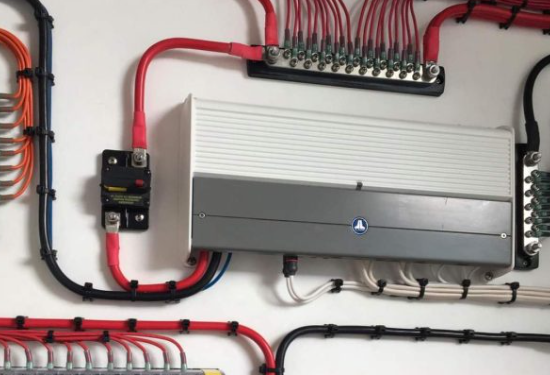
Inverters move large currents, so a professional installation is not optional. It includes:
OnBoat Marine designs and installs inverters and inverter chargers on site across Broward, Miami-Dade and Palm Beach counties, together with the battery banks and charging systems that support them.
See our battery banks and charging systems service, read our marine battery charger guide, or contact us to plan your system.
Add the wattage of everything you want to run at the same time and choose an inverter whose continuous rating covers it with margin, and whose surge rating covers motor and compressor starts.
It is possible, but it requires a large battery bank, usually lithium, and a strong charging system. For most boats the generator or shore power remains the practical source for air conditioning.
For simple resistive loads it can work, but many electronics, motors and chargers run poorly on it. Pure sine wave is the safer choice on a modern boat.
An inverter only converts DC to AC. An inverter charger also charges the batteries from shore power or the generator and switches automatically between sources.
Inverters handle high DC currents and connect to the AC system, so errors can cause fires or shock hazards. We recommend professional installation.
Need help? Request a quote or see our Battery Banks & Charging Systems services.
30 A vs. 50 A service, shore power vs. generator,...
Read MoreRigid vs. flexible panels, MPPT controllers, shading and integration with...
Read MoreAC/DC distribution, breakers, digital switching and when to upgrade your...
Read MoreCore components, integrated electronics, common installation mistakes and why professional...
Read More