Marine Electronics Trends & Leading Brands

Marine electronics are changing quickly. Helms are becoming glass bridges, boats are connected to the internet offshore, lithium is replacing lead-acid, and systems that used to work alone now share one network.

This guide summarizes the trends we see on boats and yachts in South Florida and the brands leading them, to help you plan upgrades that will still make sense in the years ahead.

Integrated Helm Systems

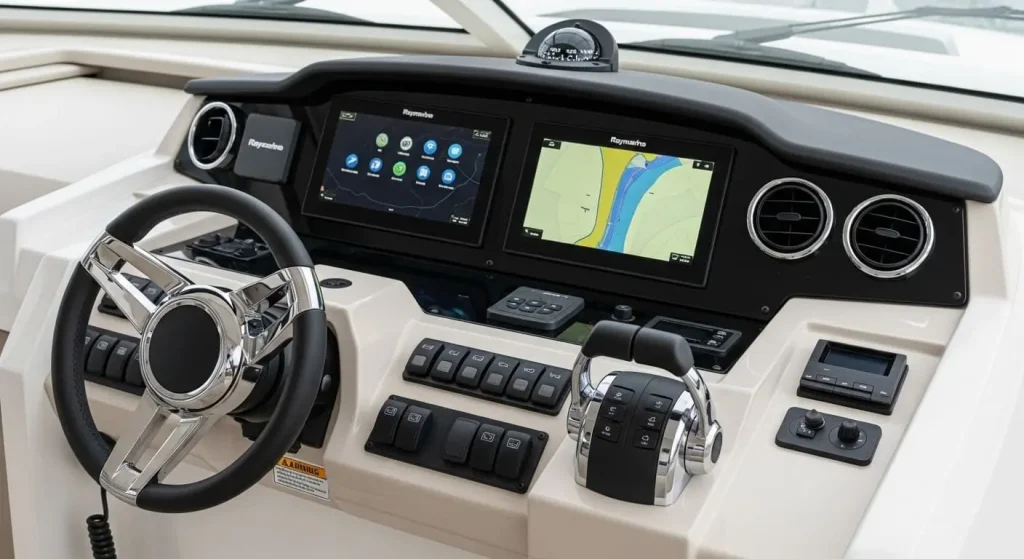
Large multifunction displays now combine charts, radar, sonar, cameras, engine data and audio, often across two or three screens that work as one glass bridge. With digital switching, the same screens control lighting, pumps and other systems.

See our GPS and chartplotter guide and switch panels guide.

Connectivity Offshore

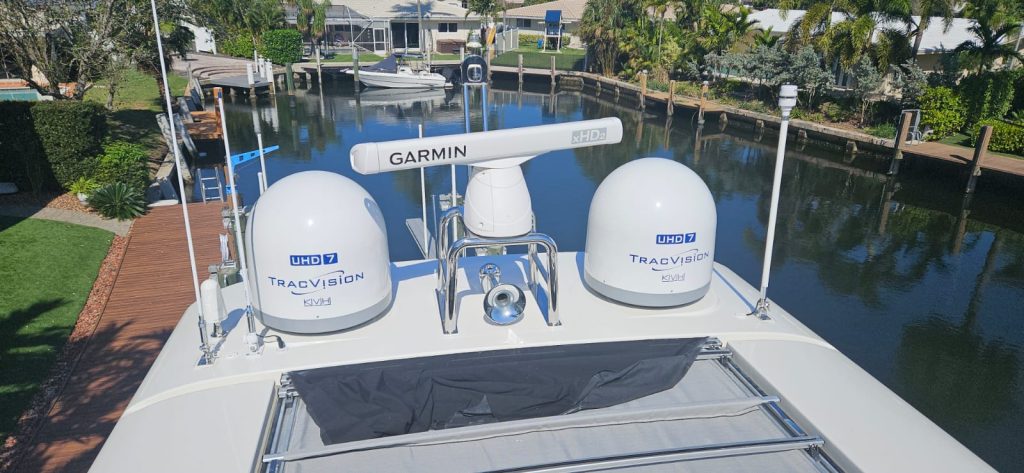
Satellite internet such as Starlink, combined with 5G and marina WiFi, has made fast internet on board practical for streaming, video calls, remote work and remote monitoring. Onboard networks now need the same attention as a home or office network, including security.

See our yacht connectivity service.

Navigation and Safety Technology

Solid-state radar with Doppler target highlighting, AIS transponders, live sonar and autopilots that follow routes have become standard on many new boats. Remote monitoring alerts owners to bilge, battery and security events from anywhere.

See our marine radar guide and autopilot guide.

Entertainment and comfort

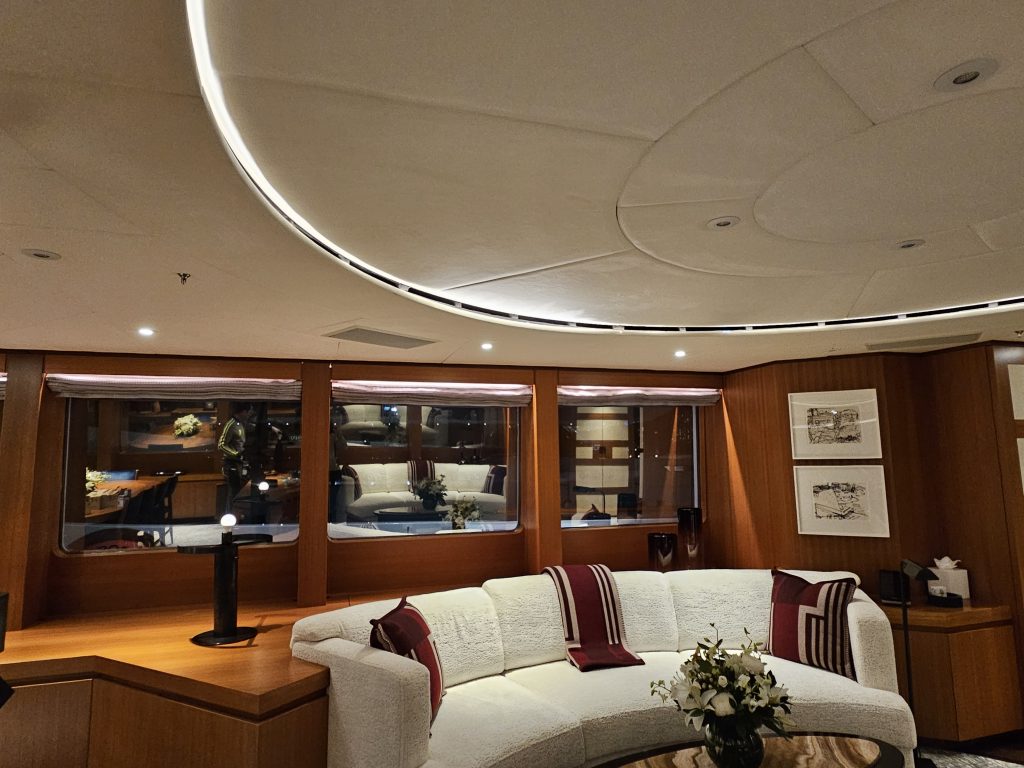
Multi-zone audio, streaming, televisions in every cabin and lighting scenes controlled from a phone are now expected on many yachts. The challenge is integrating them cleanly, with wiring and power that do not interfere with navigation electronics.

Lithium Power and Energy Management

Lithium battery banks, high-output alternators, inverter chargers and solar are allowing longer stays at anchor with less generator time. Battery management systems and monitoring make that power visible and safe.

See our marine batteries guide and inverters guide.

Leading Marine Electronics Brands

  • Furuno: known for commercial-grade radar and sonar, with the NavNet TZtouch3 platform.
  • Garmin: a broad ecosystem of chartplotters such as the GPSMAP series, sonar, radar, autopilots and audio.
  • Raymarine: Axiom displays, Quantum radar and Evolution autopilots.
  • Simrad: NSS multifunction displays and Halo radar, popular on fishing and cruising boats.
  • B&G: sailing-focused electronics such as the Zeus chartplotters.

Each ecosystem works best with its own components, so the brand you choose today shapes future upgrades.

Beyond navigation, we work with Victron Energy and Mastervolt for power, CZone and Maretron for digital switching and monitoring, Fusion and JL Audio for audio, Lumitec for lighting, and KVH, Intellian and Digital Yacht for connectivity.

Planning Your Upgrade in South Florida

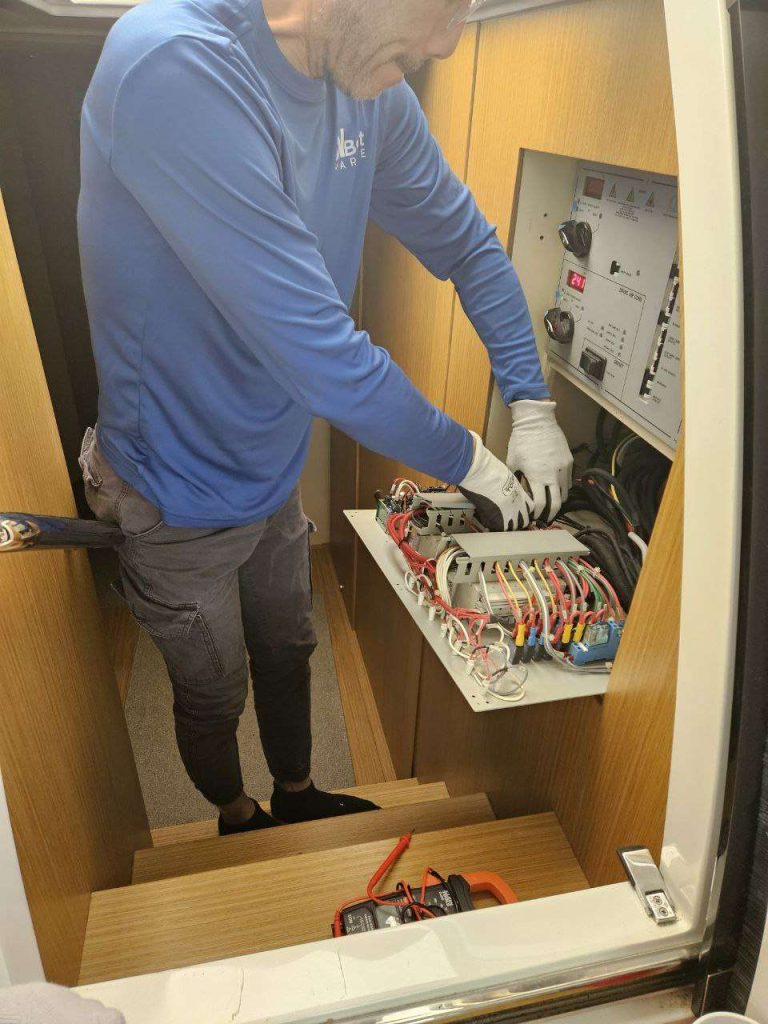
OnBoat Marine helps owners plan and install modern electronics on site across Broward, Miami-Dade and Palm Beach counties, from a single new display to a complete integrated helm.

A good upgrade starts with a review of what is already on board. Transducers, sensors, cabling and antennas can often be reused, and planning the network once avoids paying twice for parts that do not work together. We also pay attention to the finish: flush-mounted displays, clean helm panels and hidden wiring are part of a professional installation.

See our marine electronics services or contact us to talk about your project.

Frequently Asked Questions

Is it worth upgrading older electronics?

If your displays no longer receive updates or cannot connect to newer radar, sonar or connectivity systems, an upgrade usually brings major improvements in safety and usability.

Furuno, Garmin, Raymarine, Simrad and B&G are all strong. The best choice depends on your boat, how you use it and the equipment you already have.

Basic data can be shared over NMEA 2000, but the deepest integration comes from staying within one ecosystem.

For owners who need reliable internet offshore or at anchor, it has become one of the most popular upgrades.

Lithium offers more usable capacity and less weight, but it must be planned as a system with compatible charging and a battery management system.

Call Now

Contact